The Diamond Monopoly: How De Beers Controlled the Global Diamond Market
Research Question
How did De Beers use its control of the world's rough diamond supply to restrict output, inflate prices, and block competition in the global diamond market?
Research Overview
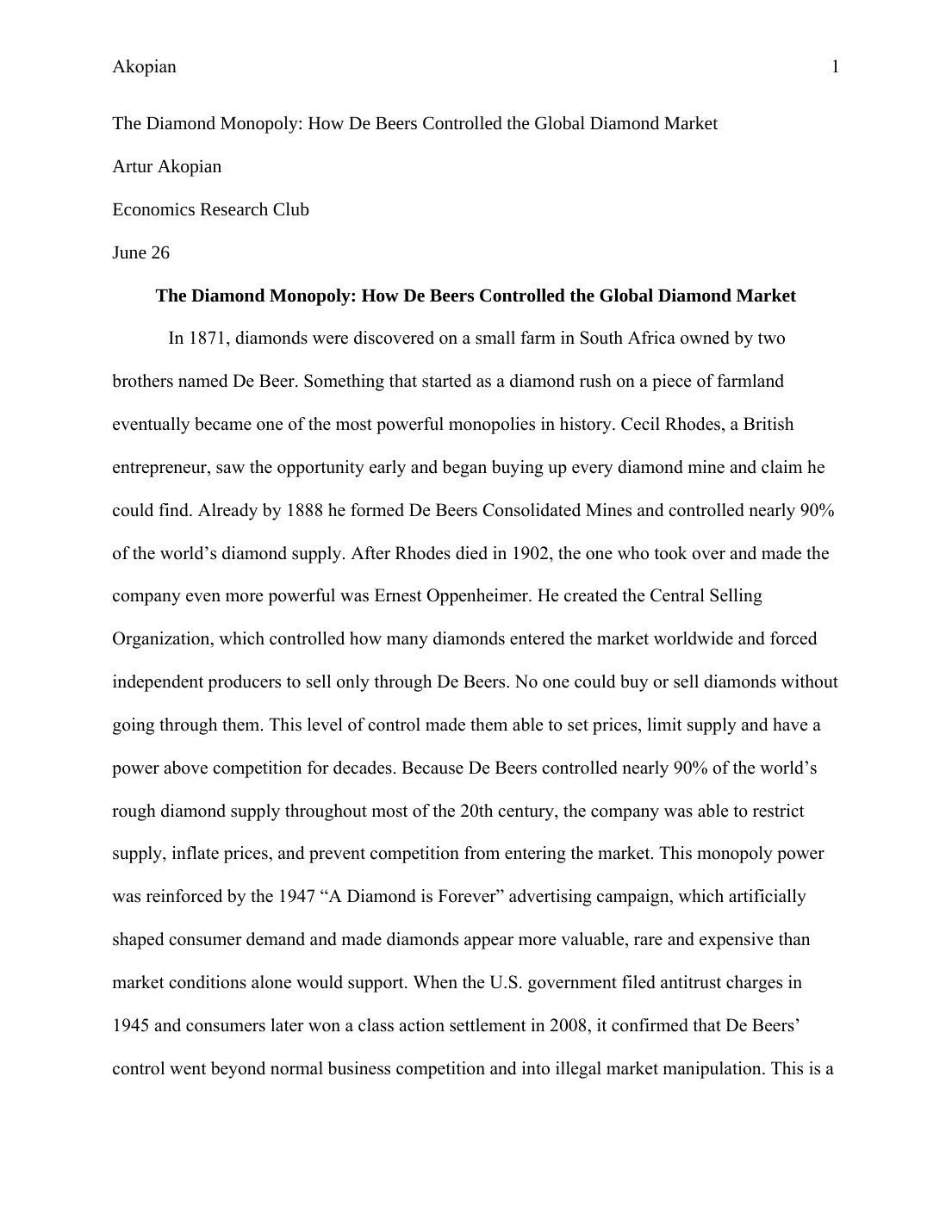
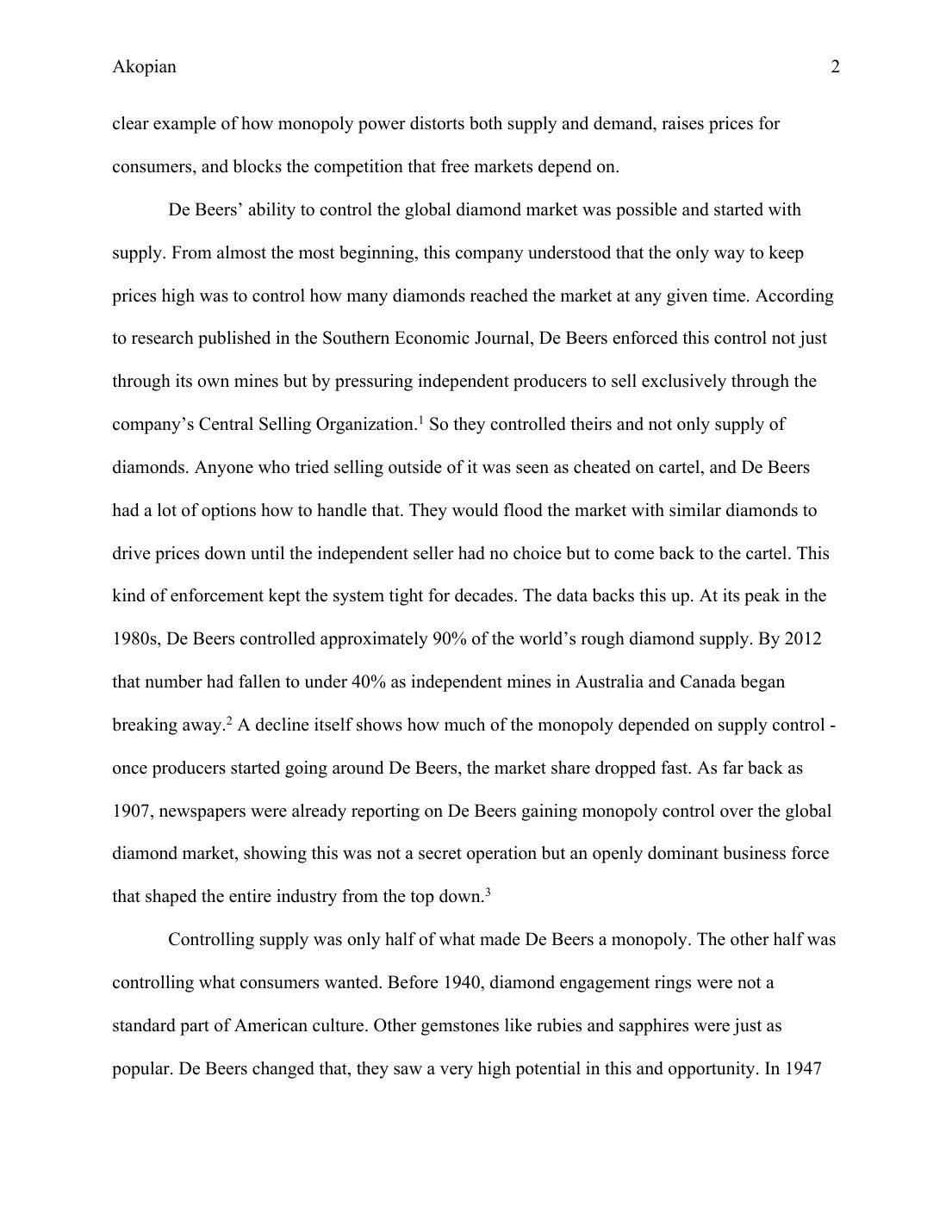
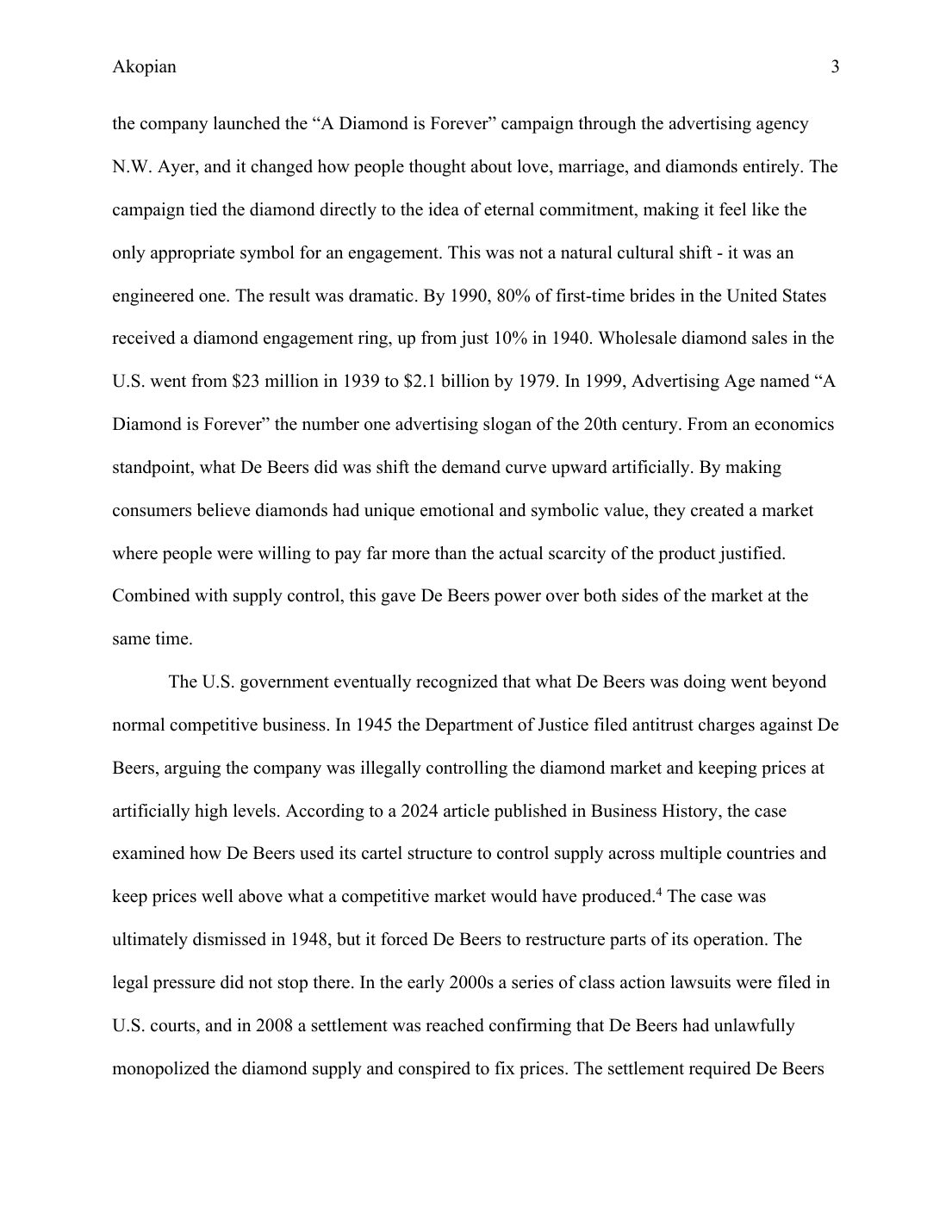
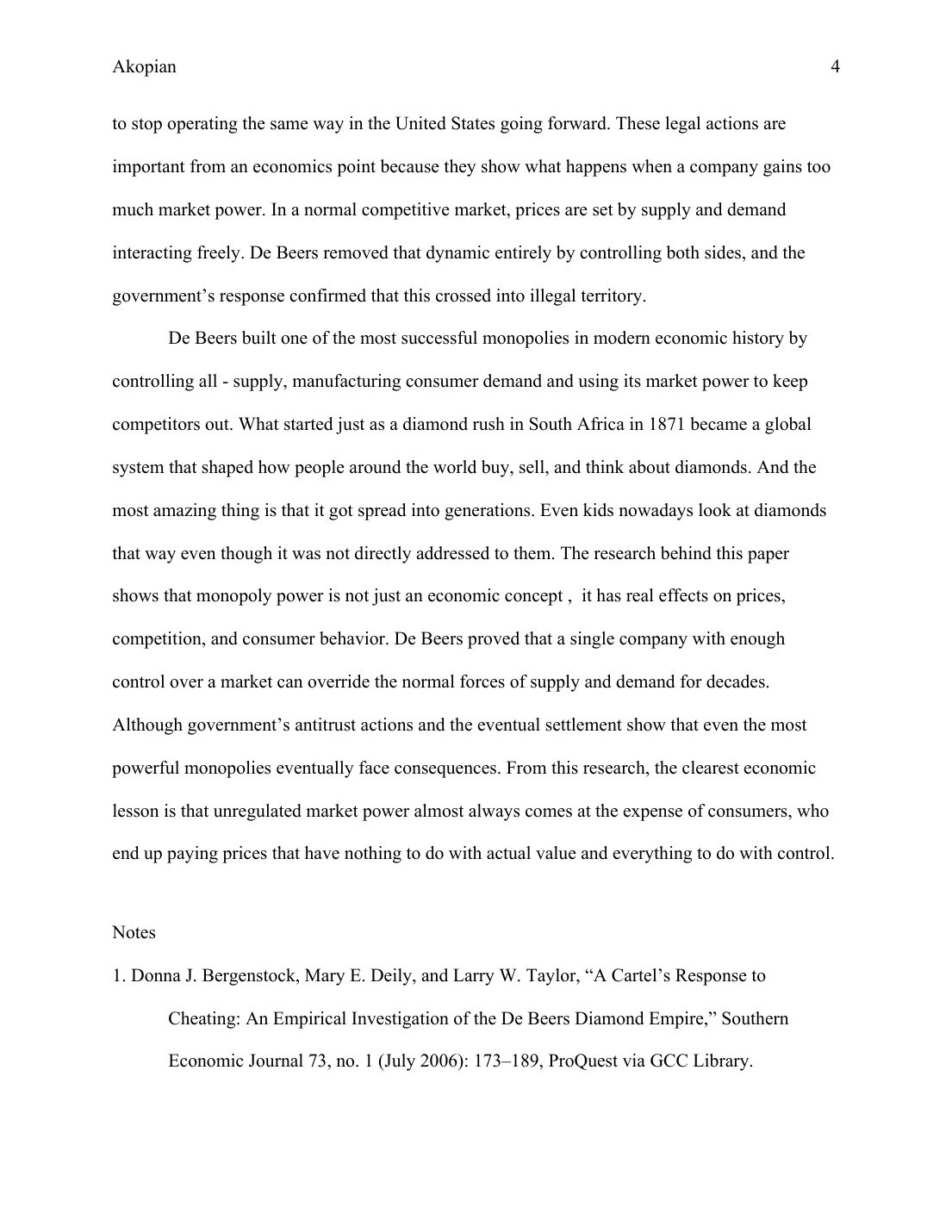
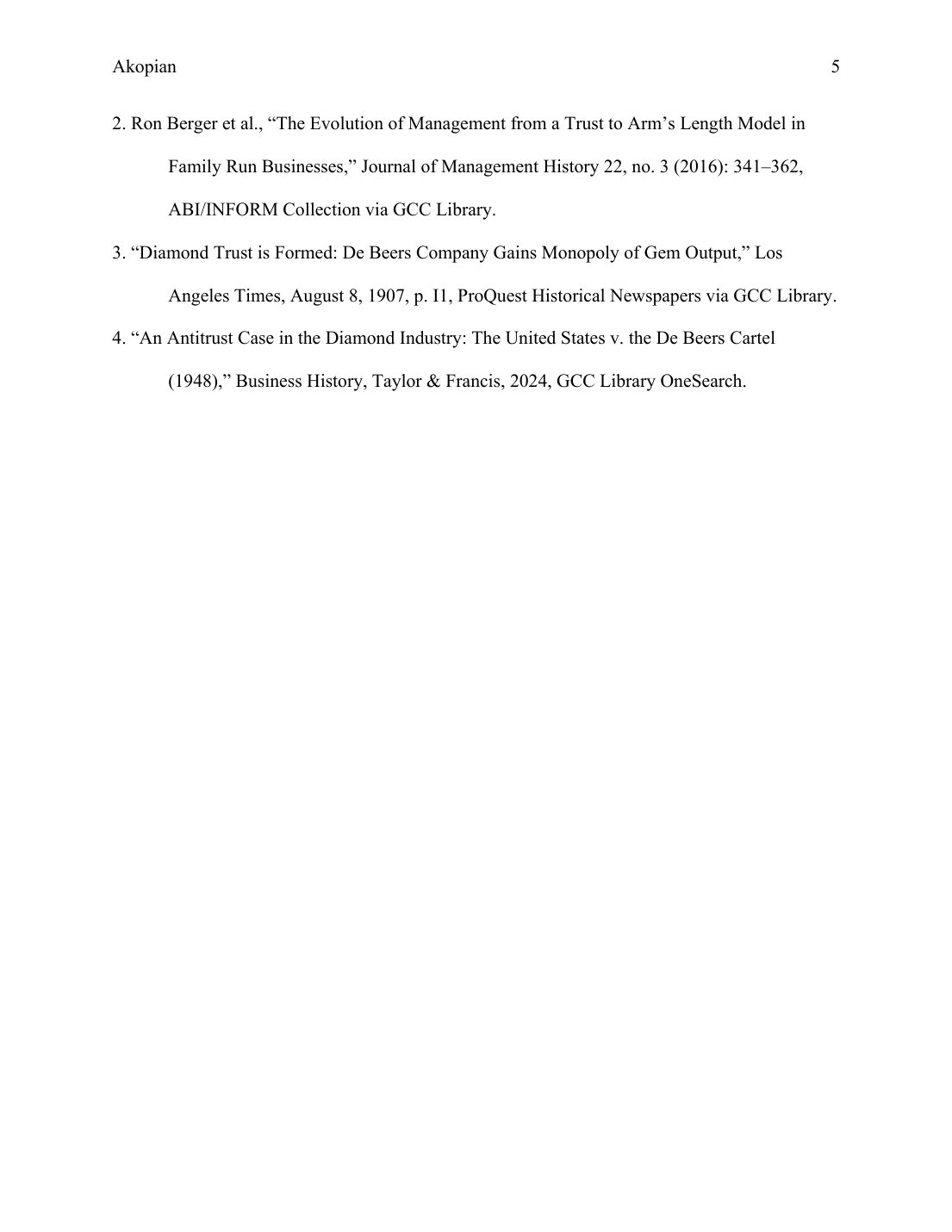
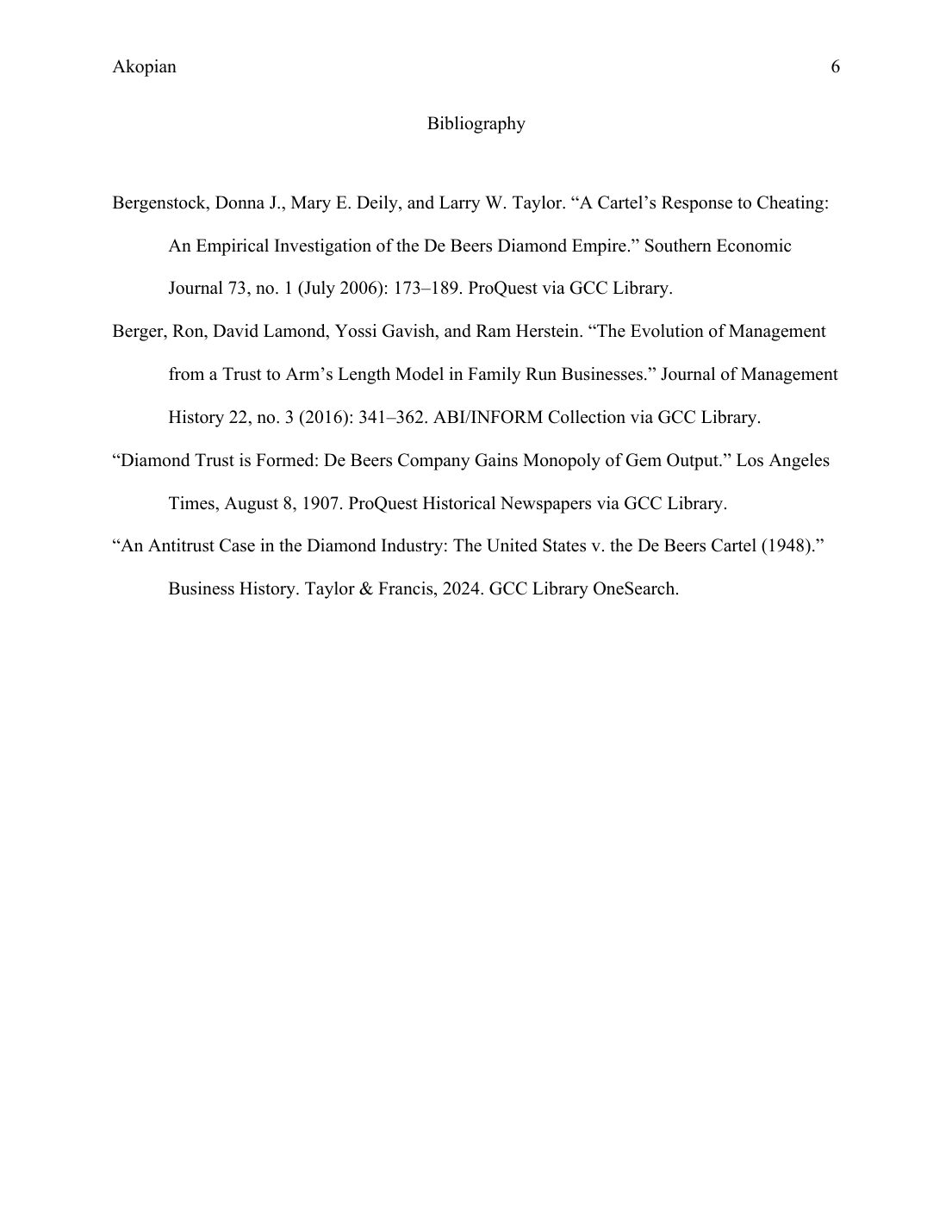
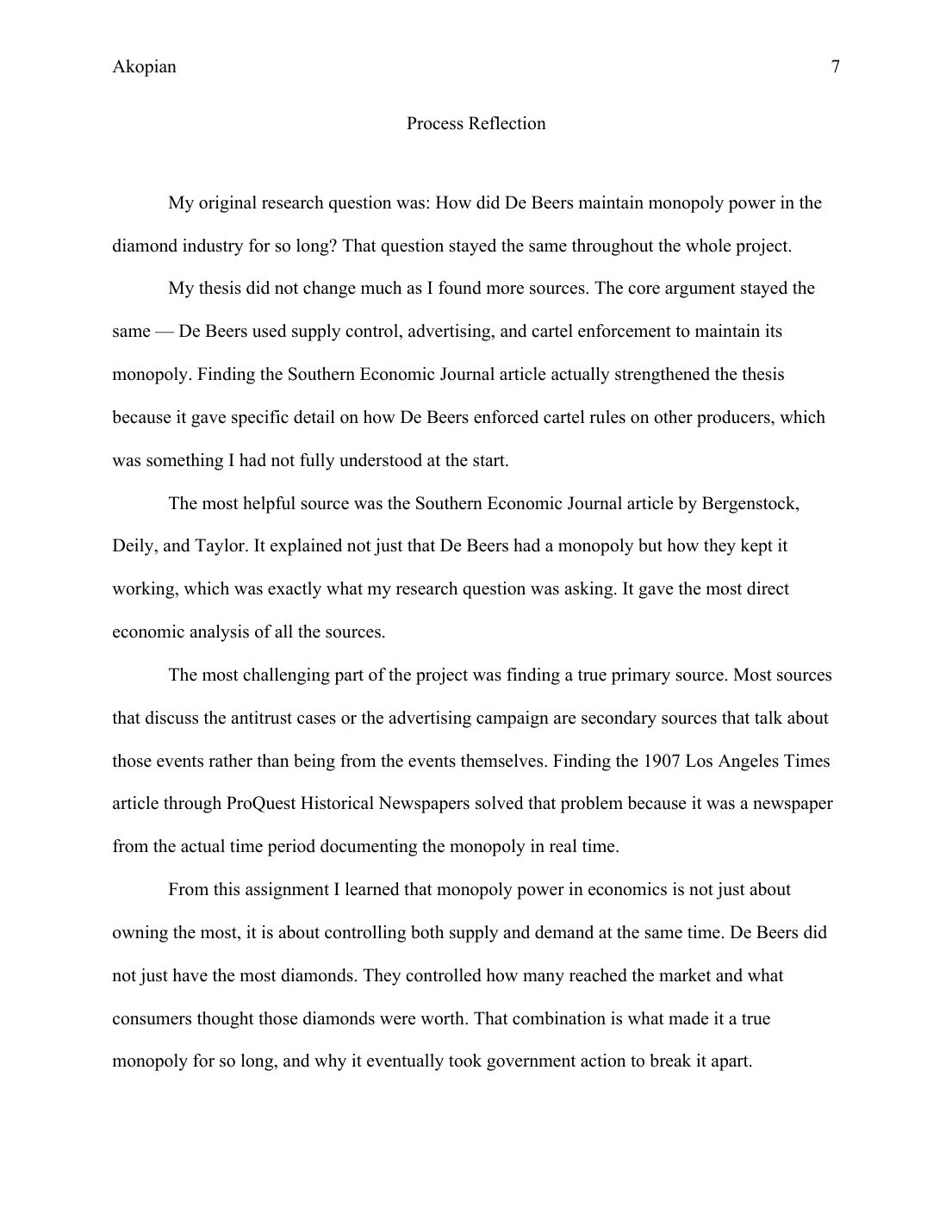
From the 1871 diamond discoveries in South Africa to the rise of De Beers Consolidated Mines, this paper traces how a single company came to control close to 90% of the world's rough diamond supply. It examines the Central Selling Organization's grip on independent producers, the price effects of deliberate supply restriction, the demand created by the 1947 “A Diamond is Forever” campaign, and the legal challenges that followed, including the 1945 U.S. antitrust charges and the 2008 class action settlement. Together these show how monopoly power distorts supply and demand, raises consumer prices, and blocks the competition that free markets depend on.
FULL RESEARCH PROJECT
This research is displayed for reading only. Please do not reproduce or redistribute it without the student author's permission.